

Direct answer: Rising orders justify a capacity decision, not an automatic hiring decision. Measure the work waiting at each step, the output your team can reliably deliver, and the cash required before customers pay. Fix handoffs and scheduling first; hire when a recurring constraint remains and the additional capacity has an accountable owner and a clear return.
What happened
The HSBC India Manufacturing Purchasing Managers’ Index, compiled by S&P Global, rose to 55.1 in September 2026 from 52.8 in August. The survey, released on 1 October, reported stronger new orders, output and hiring. It indicates a recovery in manufacturing activity across the survey panel; it does not mean that every Indian SME has experienced the same demand.
Those are the reported developments. What follows is Shikha Solutions’ interpretation for founders facing a real increase in enquiries or orders. Read the survey release and Reuters’ report.
Why SME founders should pay attention
A sudden increase in orders feels like confirmation that the business is ready to expand. It may be. But the next decision often arrives before the founder has a reliable picture of capacity.
A manufacturer may have enough salespeople to take orders but too few trained operators at one machine. A service business may have available staff yet only one person able to approve a proposal. A distributor may dispatch quickly but still depend on slow supplier replenishment.
Hiring into the wrong step raises fixed cost while customers continue waiting at the same bottleneck. Pushing more work through a weak step can increase rework, late deliveries, overtime and founder interventions. Even a profitable order can tighten cash if materials and wages are paid weeks before the customer pays.
The useful question is: Which specific step limits reliable, profitable delivery this month? Answer that before setting a new delivery promise or adding a permanent role.
What founders commonly misunderstand
1. A busy team does not prove a headcount shortage
People can be busy because priorities change daily, approvals arrive late or work is corrected twice. A workload map should distinguish productive work from waiting and rework.
2. One exceptional week is not a hiring forecast
Compare confirmed orders, qualified pipeline and repeat demand over several weeks. Permanent costs need more evidence than one surge.
3. Total capacity hides a constrained step
Adding one more sales or production person helps only if that role sits at the constraint. Check the end-to-end path from order acceptance to cash collection.
4. Faster delivery has a cost
Extra shifts, freight and rushed purchasing can protect a date while reducing contribution margin. The promise should reflect the capacity and economics of the whole order.
5. More capacity needs ownership
If every exception still reaches the founder, growth adds decisions even when the team grows. Give a named person authority to schedule, resolve routine exceptions and escalate defined risks.
The Shikha Solutions Capacity Commitment Check
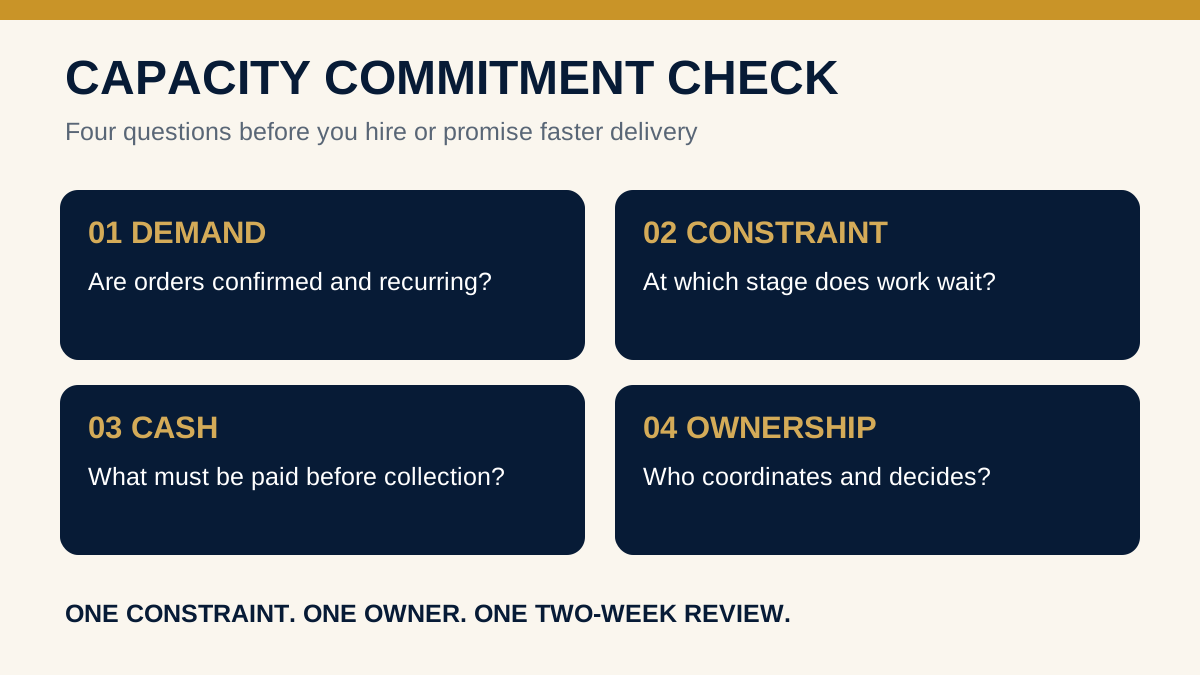
Use four questions in your weekly operating review:
1. Demand: Is the increase dependable?
Separate booked orders from enquiries. Note repeat customers, cancellations, seasonality and the probability of new deals. Plan from evidence rather than the most optimistic sales forecast.
2. Constraint: Where does work actually wait?
Count jobs awaiting approval, materials, production, quality check, dispatch or customer response. Measure the queue and the time spent there. Fixing an avoidable handoff may release capacity without a hire.
3. Cash: What must leave before money arrives?
Estimate incremental materials, wages, freight and working capital. Compare the expected margin and payment date for the extra orders. Volume that strains cash needs different terms or pacing.
4. Ownership: Who can keep delivery moving?
Name the person responsible for the daily schedule, customer promise and exception log. Define which decisions they can make and when the founder must be called. Capacity is operational only when someone can coordinate it.
If demand is recurring, the queue persists after process fixes, economics work and ownership is clear, a targeted hire or shift may be justified. If one test fails, repair that point and review again in two weeks.
Founder Action: a 15-minute capacity check
Pick one product or service line with rising orders. On a sheet, write its last ten completed orders and the next ten confirmed orders.
- Three minutes — Demand: Count what is confirmed, repeat and still uncertain.
- Four minutes — Constraint: Mark the stage at which each order waited longest and why.
- Three minutes — Cash: Estimate what the next ten orders require before customer payment.
- Three minutes — Ownership: Name who can manage scheduling and routine exceptions without you.
- Two minutes — Decision: Choose one action: remove a delay, adjust the delivery promise, trial a shift, change terms or draft a role with a measurable output.
Write the decision in one sentence: “For the next two weeks, ___ owns ___; we will track ___ and decide on additional capacity when ___.”
Final thought
Stronger demand is an opportunity. The value comes from delivering it reliably, keeping margin intact and allowing the team to coordinate without every decision returning to the founder.
Before adding a permanent cost, identify the constraint that would actually change. A small operating improvement can be the right first move; a well-defined hire can be the right next one.
Unsure where growth is creating pressure? Take Shikha Solutions’ free 15-question Business Health Check. It takes about three minutes and helps identify whether sales, people or systems need attention first. Take the Business Health Check →